What to expect?
The TMS clinic does not make any changes to your medication. Your psychiatrist continues your care and decides on medication changes. After the TMS course, Rewire TMS Clinics sends a report to your treating psychiatrist.
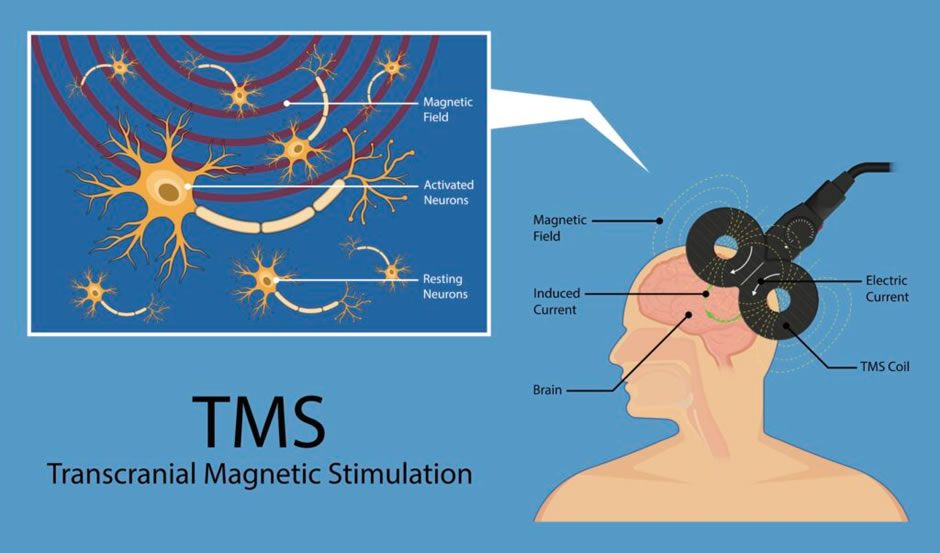
- In the first session a psychiatrist will assess your suitability for the treatment and explain everything to you. Then we take some measurements of your head to work out treatment site, and find your motor threshold to work out your dosages. TMS, done correctly, is an individualised treatment programme.
2. Before the treatments, you will need to remove all items sensitive to magnets, like jewellery.
3. You sit in a comfortable chair. You are awake throughout.
4. Because there is a clicking noise, you will be asked to wear earplugs to protect your hearing.
5. A TMS Technician will administer the treatments. They anywhere from 9 minutes to 60 minutes, depending on the protocol prescribed for you.
6. Afterwards, you can drive home and resume normal activities.
Side effects
TMS is a very safe option that has been studied for over 30 years. It does not have any long term side effects.
Although some side effects during treatment may occur, it is uncommon to stop treatment because of them.
Most common:
- Scalp discomfort or headache near where the coil is placed
- Transient tiredness
- Some initial insomnia
These are usually minor and patients develop tolerance to them after the first 2 weeks of treatment. They do not stop patients from driving or returning to work.
- There is the risk of seizure during treatment, but it is very rare, 0,1%. It does not cause epilepsy.